Your Official Guide to Playing Bocce
A good backyard game should be easy to learn, simple to set up, and engaging enough to keep everyone involved. Bocce checks every box. It combines accuracy, strategy, conversation, and friendly competition, making it a great outdoor activity for children, adults, and families. This Guide to Playing Bocce will help you create a game that feels organized, competitive, and welcoming for beginners.
Whether you are discovering bocce for the first time or refreshing your knowledge before a backyard gathering, this Guide to Playing Bocce explains the equipment, playing area, basic rules, scoring system, and strategies you need to begin.
You do not need a regulation court or advanced athletic ability. A reasonably flat section of lawn, a bocce set, and a few friends are enough to get started.
What Is Bocce?
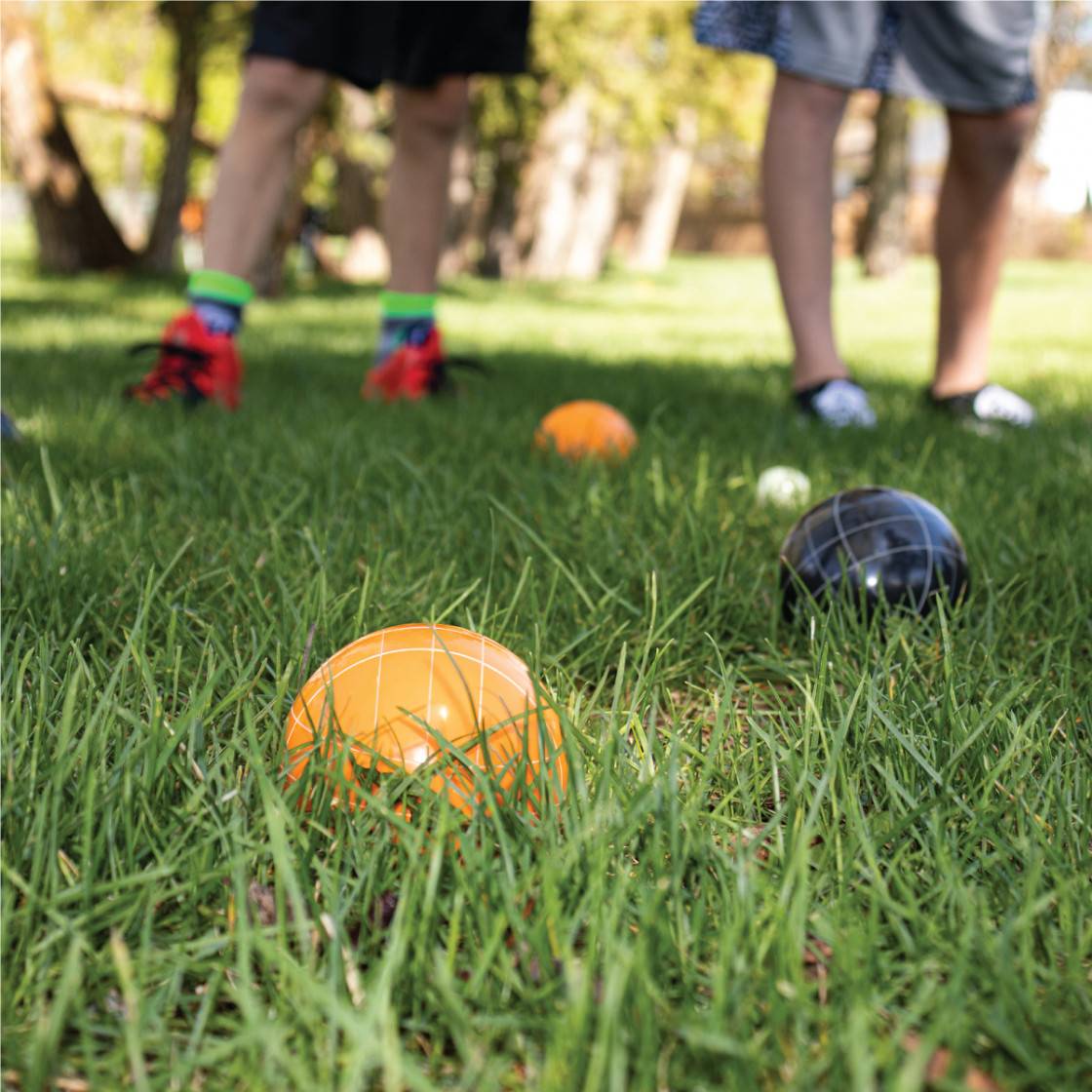
Bocce is a traditional outdoor game in which players or teams take turns rolling large balls toward a smaller target ball called the pallino.
The objective is to place your bocce balls closer to the pallino than your opponent’s balls. Players may also strike another ball to move it away from the target or improve their position.
The rules are simple enough to understand within a few minutes. The strategy can become more sophisticated as players gain experience.
That balance makes bocce suitable for a relaxed family gathering, a neighborhood tournament, or a competitive match between experienced players. This Guide to Playing Bocce focuses on casual backyard play while following the core principles of the traditional game.
As this Guide to Playing Bocce explains, the game becomes more strategic once players learn how to block shots, move the pallino, and protect scoring balls.
Equipment Included in a Guide to Playing Bocce
You do not need much equipment to begin playing bocce. Most standard bocce sets include everything required for a match.
You will need:
- Eight large bocce balls
- One smaller target ball called the pallino
- A relatively flat playing surface
- A measuring tape or piece of string
- A visible starting line
Following the equipment recommendations in this Guide to Playing Bocce will help you avoid delays and scoring disagreements during the game.
The eight bocce balls are usually divided into two colors or patterns. Each team receives four balls.
Traditional bocce balls can feel heavy, especially for children. Families with younger players may prefer a lightweight recreational set. The rules and scoring remain the same.
A measuring tape helps settle close scoring decisions. A piece of string can also work when two balls appear to be the same distance from the pallino.
Your playing surface can be grass, packed dirt, sand, fine gravel, or a dedicated bocce court. Each surface changes how quickly and smoothly the balls roll.
A complete Guide to Playing Bocce should also account for players waiting between turns. Consider placing a comfortable cedar garden bench near the playing area. It gives players and spectators a convenient place to sit without crowding the court.
Choosing a Backyard Bocce Playing Area
A regulation bocce court is larger than many residential yards can accommodate. Backyard bocce allows you to adjust the court dimensions to suit your available space.
Look for a section of your yard that is reasonably flat and free from roots, large rocks, sprinkler heads, and other obstacles.
A playing area that measures approximately 60 feet long provides plenty of room for most casual games. A shorter distance of 30 to 40 feet can work well for children, beginners, and smaller backyards.
The width of the playing area can range from 8 to 12 feet. You can mark the sides with rope, chalk, landscaping paint, cones, or small wooden stakes.
The surface does not need to be perfectly level. Gentle slopes and small irregularities can make the game more challenging. Players must learn how the terrain affects each roll.
The most important lesson in this Guide to Playing Bocce is consistency. Establish the court boundaries before the game begins and apply the same rules to every player. Use this Guide to Playing Bocce to adjust the court dimensions while keeping the same boundaries and throwing rules for every player.
How to Set Up a Bocce Game
Setting up a backyard bocce game takes only a few minutes.
Follow these steps:
- Select a flat or gently sloped playing area.
- Mark a starting line for all throws.
- Establish the side and end boundaries.
- Divide the players into two teams.
- Assign four bocce balls to each team.
- Decide which team will throw first.
- Toss the pallino into the playing area.
The setup process in this Guide to Playing Bocce can be completed in a few minutes using cones, rope, chalk, or other simple boundary markers.
Teams may consist of one, two, three, or four players. When playing with two players, each person rolls four bocce balls. When playing with four players, each person rolls two.
Larger groups can rotate players between rounds or create a small backyard tournament.
Before the first round, explain the boundaries, throwing order, scoring target, and rules for balls that leave the playing area. This prevents disagreements once the game begins.
Guide to Playing Bocce Rules
A coin toss or another fair method determines which team starts the game.
The starting team throws the pallino beyond the designated starting line. The pallino should land within the established court boundaries. That same team then rolls the first bocce ball toward the pallino.
The opposing team rolls next and attempts to place a ball closer to the pallino. The team whose ball is farther away continues rolling until it places a ball closer or runs out of balls. Play continues until all eight bocce balls have been thrown.
Players generally use an underhand throwing motion. They may roll the ball smoothly along the ground or toss it slightly into the air. The ball must be released before the player crosses the starting line.
A bocce ball may strike another bocce ball. It may also hit and move the pallino. These shots are legal and often become an important part of the game’s strategy.
This Guide to Playing Bocce recommends establishing a simple out-of-bounds rule before play begins. A ball that leaves the marked court can be removed from the round. A moved pallino can remain in its new position as long as it stays within the playing area.
Players who want to follow more formal standards can review the United States Bocce Federation rules before organizing a tournament.
Guide to Playing Bocce: Scoring Explained
Scoring occurs after all eight bocce balls have been thrown.
Only one team can score during a round.
The team with the ball closest to the pallino receives one point. That team earns an additional point for every other ball that is closer to the pallino than the opposing team’s nearest ball.
For example, imagine the red team has the two balls closest to the pallino. The green team has the third-closest ball. The red team scores two points for the round.
If the red team has all four balls closer than the green team’s nearest ball, the red team scores four points.
Use a measuring tape or string when balls appear equally close. Measure from the nearest edge of the bocce ball to the nearest edge of the pallino.
Most casual games are played to 12 or 15 points. Families with young children may prefer a shorter game of seven or nine points.
This Guide to Playing Bocce recommends choosing the winning score before the game begins. The team that scores during a round usually throws the pallino to start the next round.
Keep this Guide to Playing Bocce nearby during your first few matches so every player can review the scoring method between rounds.
Guide to Playing Bocce Throwing Techniques
Good bocce players rely on control, consistency, and an understanding of the playing surface.
Beginners often throw the ball too hard. A softer roll provides more control and reduces the chance that the ball will travel beyond the pallino.
Stand behind the starting line with your feet comfortably spaced. Hold the ball in one hand and use a smooth underhand motion. Keep your eyes on the intended path instead of focusing only on the pallino.
Release the ball close to the ground when using a rolling shot. This reduces bouncing and helps the ball follow a predictable path.
A higher toss can be useful when you need to clear an obstacle or strike another ball. This shot requires more control and may be difficult on hard surfaces.
Practice several rolls before beginning a competitive match. Watch how the ball responds to the lawn, sand, dirt, or gravel.
Tips and Strategies for Playing Bocce
Bocce becomes more engaging when players move beyond simply aiming at the pallino.
Use a Controlled Roll
A smooth roll gives you better control over distance and direction. Power matters less than accuracy during most shots.
Study the Surface
Grass, dirt, sand, and gravel affect each ball differently. Wet grass may slow the ball. Dry, closely cut grass may create a faster roll.
Watch the first few throws carefully. Adjust your speed and angle based on how the balls move.
Create a Defensive Block
Place a bocce ball directly in front of the pallino. This can prevent your opponent from taking a clear path to the target.
Your ball may not be the closest, but it can force the opposing team to attempt a more difficult shot.
Knock Away an Opponent’s Ball
A successful bocce strategy does not always involve rolling closer to the pallino. You may gain an advantage by striking an opponent’s scoring ball and moving it farther away.
This shot requires more force and accuracy than a standard roll.
Move the Pallino
Because the pallino can be moved, an accurate impact can completely change the scoring position.
You might move the pallino toward your team’s balls or away from your opponent’s strongest position.
Protect a Scoring Ball
If your team already has the closest ball, use your remaining throws to create obstacles around it. These defensive balls can make it difficult for the opposing team to reach the pallino.
These techniques are an important part of any Guide to Playing Bocce because they transform a simple lawn game into a contest of positioning, judgment, and planning.
Common Bocce Mistakes to Avoid
New players often make the same avoidable mistakes.
The first is using too much force. A hard roll can travel well beyond the target or leave the playing area entirely.
The second is ignoring the surface. A shot that works on short grass may behave differently on sand or packed dirt.
The third is aiming directly at the pallino without considering the position of other balls. Sometimes the best shot lands beside an opponent’s ball, blocks a pathway, or moves the pallino.
Players should also avoid stepping over the starting line before releasing the ball.
This Guide to Playing Bocce encourages beginners to focus on repeatable throwing mechanics before attempting difficult knock-away shots.
The recommendations in this Guide to Playing Bocce can help new players improve their control without making the game feel too technical.
Hosting a Backyard Bocce Game
A Guide to Playing Bocce can also serve as a quick reference for guests who arrive after the first game has already started.
Bocce works well for summer barbecues, birthday celebrations, family reunions, neighborhood gatherings, and casual evenings with friends.
Set up the playing area before guests arrive. Place the bocce balls near the starting line and explain the basic rules before the first round.
A short practice round can help new players understand the throwing order and scoring system.
Provide refreshments and shade near the court. A teak table and chair set gives guests a comfortable place to eat, relax, and watch the game between turns.
You can add a teak market umbrella to create a shaded seating area for players and spectators.
Keep tables, chairs, and refreshments far enough away from the playing surface to prevent balls from rolling into the seating area.
For a larger gathering, create a simple tournament bracket. Divide guests into teams and have the winners advance to the next round.
Guide to Playing Bocce With Children
Bocce can be adapted easily for younger players.
Shorten the playing distance so children do not need to throw the ball as far. Allow younger players to stand closer to the pallino or use lighter bocce balls.
You can simplify scoring by awarding one point to the team with the closest ball and ignoring additional scoring balls.
Focus on taking turns, aiming, and having fun. Children can learn the complete scoring system as they become more comfortable with the game.
A family Guide to Playing Bocce should keep the rules flexible. The goal is to include every player while preserving the basic challenge of getting close to the pallino.
Playing Bocce on Different Surfaces
One advantage of bocce is that you can play it in many outdoor settings.
Grass
Grass is convenient for backyard games. Short, dry grass produces a faster roll. Thick or wet grass requires more force.
Sand
Beach bocce creates a slower and less predictable game. Balls may stop quickly or settle into soft areas.
Packed Dirt
Packed dirt provides a smooth, traditional playing surface. Small stones and uneven patches can influence the ball’s direction.
Gravel
Fine gravel can produce a controlled roll, although larger stones may cause unpredictable bounces.
Driveways
A driveway can provide a flat playing area. Bocce balls move quickly on pavement, so players should use less force.
This Guide to Playing Bocce recommends testing the surface with several practice rolls before establishing the court length.
Why Bocce Fits Outdoor Living
Bocce is accessible, flexible, and easy to organize. It can feel relaxed during a family afternoon or become competitive during a neighborhood tournament.
The game allows people to participate without constant running or physical contact. Players from different generations can compete in the same match.
Bocce also encourages guests to spend time outside while talking, laughing, and enjoying one another’s company.
Comfortable seating helps make the experience more inviting. Summer Cedar offers a complete collection of cedar benches that can provide seating near your backyard game area.
With a defined court, outdoor furniture, shade, and refreshments, your backyard can become a destination for game nights throughout the warmer months.
Put This Guide to Playing Bocce Into Action
This Guide to Playing Bocce gives you the information needed to select your equipment, prepare the playing area, understand the rules, keep score, and develop a winning strategy.
Start with a standard bocce set and a reasonably flat section of your yard. Establish clear boundaries and choose a winning score before the first round begins.
Keep the first few games casual while everyone learns how the balls respond to the playing surface. As players gain experience, introduce defensive blocks, strategic knock-away shots, and longer playing distances.
Return to this Guide to Playing Bocce whenever you need to settle a scoring question, teach new players, or organize another backyard tournament.
With simple equipment, flexible rules, and plenty of opportunities for friendly competition, bocce remains a timeless addition to backyard life. Pair the game with comfortable outdoor furniture, cold refreshments, and good company to create an outdoor experience your friends and family will want to enjoy again.
Share this Guide to Playing Bocce with your guests before the gathering so they can review the basic rules, scoring system, and throwing techniques.
FAQ Section
How many players do you need to play bocce?
Bocce can be played one-on-one or in teams of up to four players. Larger groups can rotate in for casual play.
How long does a bocce game usually take?
Most games last 30 to 45 minutes, depending on the number of points needed to win.
Do I need a special court to play bocce?
No, bocce can be played on grass, dirt, or sand. A dedicated court simply provides more consistency.