How to Clean Wood Patio Furniture Safely: The Ultimate Damage-Free Guide
Clean wood patio furniture correctly, and you can remove dirt, pollen, food residue, mildew, and weather stains without harming the wood beneath them. Use the wrong cleaner, brush, or washing method, and you may leave behind raised grain, faded areas, water marks, scratches, or a damaged finish.
That is why cleaning outdoor wood furniture requires more care than washing plastic chairs or spraying down a concrete patio. Learning how to clean wood patio furniture safely can prevent unnecessary refinishing work and help each piece maintain a smooth, attractive surface.
The good news is that you usually do not need expensive equipment or harsh chemicals. A bucket of warm water, a mild cleaning solution, a soft brush, and a little patience can handle most routine cleaning.
This guide explains how to clean wood patio furniture safely, how to adjust the process for Western Red Cedar and Java teak, and how to deal with common problems such as mildew, bird droppings, food stains, tree sap, and weathered surfaces.
Once you understand how to clean wood patio furniture, routine maintenance becomes faster and easier. You will also learn which cleaning mistakes cause damage and how to keep your furniture cleaner between deeper washes.
Why You Should Clean Wood Patio Furniture Carefully
Outdoor furniture faces conditions that indoor furniture rarely encounters.
Rain leaves moisture in joints and along the bottom of legs. Pollen collects in corners. Food and drink spills soak into unfinished surfaces. Tree sap hardens in the sun. Birds leave corrosive residue. Humid weather can encourage mildew. Dirt becomes embedded in the grain when people sit on dusty furniture.
When you clean wood patio furniture regularly, dirt and organic debris have less time to settle into the grain. Cleaning removes these materials before they become harder to manage.
However, wood is a natural, porous material. It can absorb water, react to chemicals, and develop surface damage when scrubbed too aggressively. A cleaning method that works on vinyl furniture may be too harsh for cedar or teak.
The safest way to clean wood patio furniture is to begin with gentle tools and the mildest effective cleaning solution.
Your goal when you clean wood patio furniture is simple:
- Loosen dirt without gouging the surface
- Remove residue without stripping the finish
- Limit the amount of water the wood absorbs
- Rinse away cleaner without saturating joints
- Allow the furniture to dry completely
- Preserve the wood’s natural grain and appearance
This balance is what separates safe cleaning from damaging cleaning.
What You Need to Clean Wood Patio Furniture
Gather your supplies before you begin. You should be able to complete most routine cleaning with basic household items.
Basic Cleaning Supplies
You do not need specialized equipment to clean wood patio furniture during routine maintenance. You will need:
- A bucket
- Warm water
- Mild dish soap or a wood-safe cleaner
- A soft-bristled nylon brush
- A soft sponge
- Microfiber cloths
- A garden hose with a gentle spray nozzle
- Clean towels
- A small toothbrush for tight areas
- Protective gloves
- A drop cloth, if you are working over a stain-sensitive surface
These simple supplies allow you to clean wood patio furniture without exposing the surface to excessive pressure or harsh chemicals. Choose a brush with flexible bristles. Stiff wire brushes and abrasive scrubbers can scratch the wood, remove soft surface fibers, and leave visible lines.
A garden hose is useful for rinsing, but keep the water pressure low. You want enough water to remove loosened dirt, not enough force to drive water into joints or lift the grain.
Optional Supplies for Specific Problems
Depending on the furniture’s condition, you may also need:
- Oxygen-based cleaner
- White vinegar
- Fine-grit sandpaper
- A plastic scraper
- A wood brightener approved for your furniture
- Furniture covers
- A manufacturer-approved protective finish
Do not combine cleaning products. Mixing household chemicals can create dangerous fumes or cause an unexpected reaction on the wood.
Inspect the Furniture Before You Start
Before you clean wood patio furniture, spend a few minutes examining each piece.
Look for:
- Loose screws or bolts
- Cracked boards
- Splintered edges
- Open joints
- Flaking paint or stain
- Soft or decayed wood
- Rust around metal fasteners
- Mildew or dark spotting
- Grease and food stains
- Sap or sticky residue
- Areas where water collects
This inspection helps you clean wood patio furniture without worsening loose joints, damaged finishes, or existing cracks.
For example, spraying water directly into an open joint can increase swelling. Scrubbing a flaking finish may remove more of the coating. Moving a chair with a loose leg can turn a small repair into a broken component.
Tighten loose hardware before cleaning. Set aside furniture that needs structural repair. Cleaning improves appearance, but it cannot correct rot, severe cracking, or a failing joint.
Identify the Wood and Finish
Try to determine:
- What type of wood do you have
- Whether the surface is unfinished
- Whether it has oil, stain, paint, or sealer
- Whether the manufacturer provides care instructions
Western Red Cedar and Java teak are common outdoor furniture materials, but they have different densities and surface characteristics.
Summer Cedar’s Western Red Cedar furniture collection provides examples of cedar furniture designed for outdoor use. Cedar is relatively lightweight and has a distinct grain, so gentle cleaning matters.
Java teak is denser and naturally contains oils that help it perform outdoors. You can see examples in Summer Cedar’s teak chair collection. Teak can still develop dirt, surface mildew, stains, and a silver-gray patina.
When in doubt, begin with the mildest possible cleaning method.
Test Your Cleaner in a Hidden Area
Never apply an unfamiliar cleaner across the entire piece immediately. A test area is especially important when you clean wood patio furniture that has been stained, painted, sealed, or previously treated with oil.
Test it first on:
- The underside of a seat
- The back of a lower support
- The inside of a leg
- Another area that is difficult to see
Apply a small amount, wait several minutes, rinse it, and allow the area to dry.
Check for:
- Color changes
- Raised grain
- Finish softening
- Cloudiness
- Uneven lightening
- Sticky residue
This small test is one of the safest steps you can take before you clean wood patio furniture with an unfamiliar product.
Wet wood naturally looks darker. Once the test area dries without discoloration or surface damage, you can clean wood patio furniture with greater confidence.
How to Clean Wood Patio Furniture Step by Step
Follow this process whenever you need to clean wood patio furniture as part of routine seasonal care.
Adjust the cleaner and scrubbing pressure based on the wood and finish.
Step 1: Choose the Right Day
Clean wood patio furniture on a mild, dry day. Choosing mild weather gives you enough time to clean wood patio furniture before the solution dries on the surface.
Avoid:
- Intense midday sun
- Freezing temperatures
- Heavy humidity
- Rain in the forecast
- Strong wind
- Extremely hot surfaces
Direct sun can cause the cleaning solution to dry before you rinse it. That may leave streaks, soap residue, or uneven marks.
A shaded area with good airflow gives you more working time and helps the furniture dry at a controlled rate.
Move the furniture onto a patio, driveway, or lawn where water can drain. Keep runoff away from sensitive plants when using anything stronger than mild soap.
Step 2: Remove Cushions and Accessories
Take off:
- Seat cushions
- Pillows
- Furniture covers
- Umbrellas
- Removable trays
- Decorative accessories
Removing these items makes it easier to clean wood patio furniture thoroughly, especially around slats, joints, and seat supports. Clean these items according to their care labels.
Do not place cushions back on damp wood. Trapped moisture can create staining and encourage mildew.
Use this opportunity to vacuum cushion seams and inspect ties, zippers, and fabric for wear.
Step 3: Brush Away Loose Debris
Before adding water, remove dry dirt.
Use a soft brush or dry microfiber cloth to clear:
- Leaves
- Pollen
- Cobwebs
- Dust
- Loose soil
- Insect debris
- Crumbs
Always remove loose debris before you clean wood patio furniture with water. Pay close attention to joints, corners, screw heads, and the spaces between seat slats.
Dry brushing prevents loose dirt from turning into muddy residue when it gets wet. It also reduces the amount of scrubbing required later.
If the furniture is heavily coated with pollen, a vacuum with a soft brush attachment can help. Keep the hard edge of the vacuum attachment away from the wood.
Step 4: Prepare a Mild Cleaning Solution
For routine cleaning, mix a small amount of mild dish soap with warm water.
You do not need a bucket full of foam. Excess soap takes longer to rinse and may leave a film.
A practical starting mixture is:
- One gallon of warm water
- A small amount of mild dish soap
Mix gently. This mild solution is usually strong enough to clean wood patio furniture that has ordinary dirt, dust, pollen, and food residue.
Avoid cleaners containing aggressive solvents, strong fragrances, abrasives, or unknown bleaching agents.
The EPA advises using mild detergent and clean water on treated or finished wood surfaces, followed by thorough drying. This supports a simple approach for routine furniture care: start gently and use stronger products only when the condition of the furniture requires them.
Start gently whenever you clean wood patio furniture, then address stubborn stains separately.
Step 5: Lightly Wet the Surface
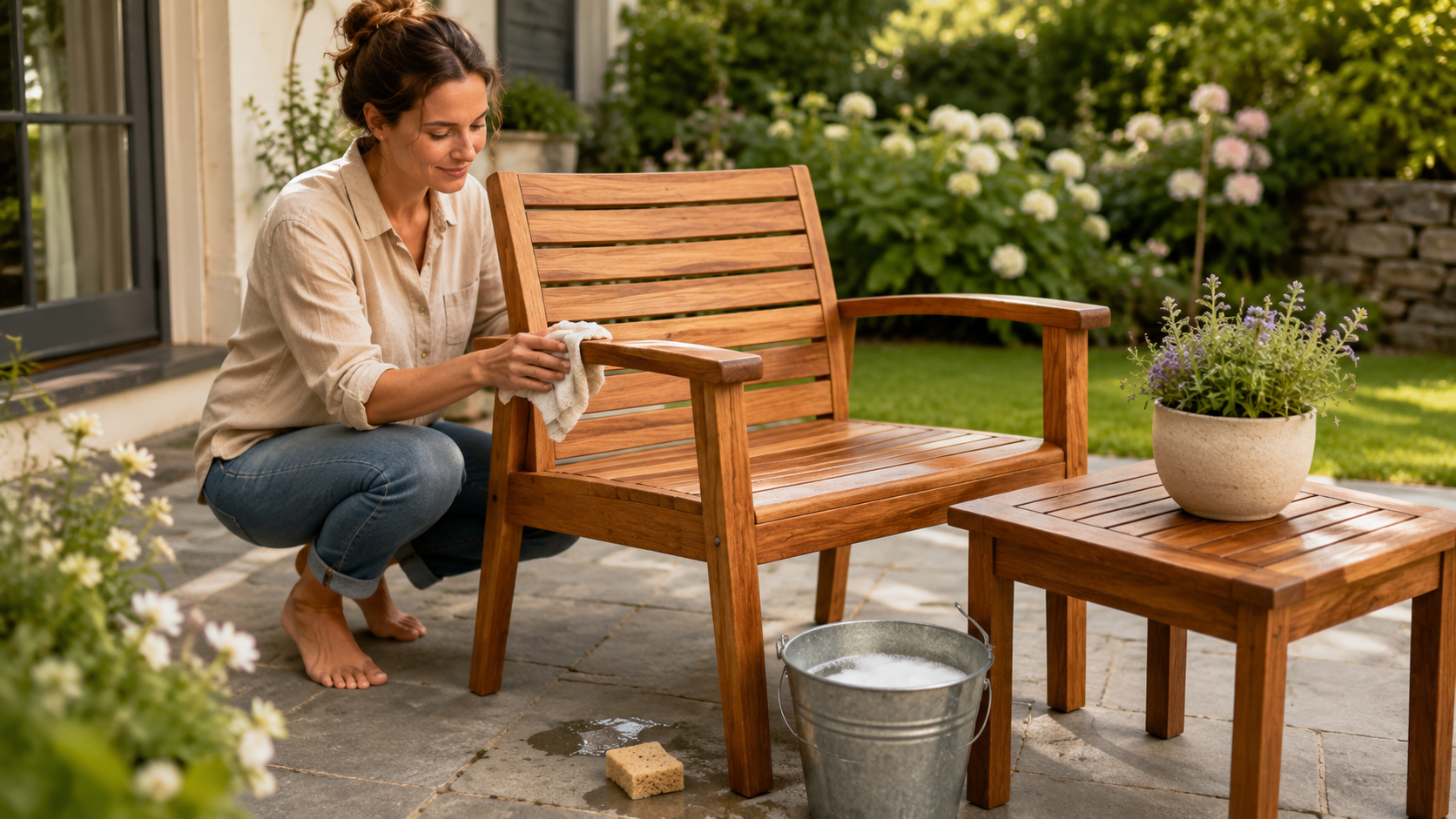
Lightly wetting one section at a time helps you clean wood patio furniture without saturating the entire piece. Use a hose with a gentle spray setting or a damp sponge to wet a manageable section.
Do not soak the entire piece; leave it sitting.
Work in sections, such as:
- Chair back
- Seat
- Arms
- Legs
- Lower supports
Lightly wetting the wood helps the cleaning solution spread. It also reduces the chance that a concentrated cleaner will absorb unevenly into a dry surface.
Avoid spraying directly into joints, bolt holes, cracks, or the end grain of boards.
Step 6: Scrub With the Grain
Dip a soft brush or sponge into the cleaning solution. Scrub the surface using light pressure and follow the direction of the grain. Working with the grain reduces visible scratch patterns and helps lift dirt from the wood’s natural texture.
When you clean wood patio furniture, focus on small sections. Do not coat the whole piece with soap and then begin scrubbing. Following the grain is especially important when you clean wood patio furniture made from softer woods such as cedar.
Use only enough pressure to clean wood patio furniture without removing soft surface fibers.
Give extra attention to:
- Armrests
- Seat fronts
- Table edges
- Areas around hardware
- The lower portion of the chair legs
- Spaces between slats
- Surfaces touched frequently
Use a toothbrush for narrow joints and detailed areas. Keep your pressure controlled.
More force does not always produce a cleaner result. It may remove softened wood fibers and create a rough surface.
Step 7: Rinse Before the Soap Dries
When you clean wood patio furniture in direct sunlight, soap can dry quickly and leave a visible film. Rinse each section with clean water.
Use a low-pressure spray. Move from the top of the furniture downward so dirty water does not run across areas you have already cleaned.
Continue rinsing until you no longer see foam or slippery residue.
Soap left on the surface may attract dirt, create streaking, or interfere with a future finish.
Do not use a pressure washer as your default method to clean wood patio furniture. High-pressure water can damage softer wood fibers, exaggerate the grain, force moisture into joints, and leave uneven lines.
A gentle rinse is usually sufficient to clean wood patio furniture without forcing moisture deep into the joints.
Step 8: Remove Excess Water
After rinsing, wipe the furniture with clean towels. Removing this water helps you clean wood patio furniture while limiting the amount of moisture the wood absorbs.
Pay attention to:
- Flat table surfaces
- Seat depressions
- Joints
- Hardware
- The underside of the arms
- Footrests
- Areas where boards meet
Removing standing water shortens drying time.
Tilt tables and chairs when practical so trapped water can drain. Place furniture legs on a dry, stable surface.
Step 9: Allow the Furniture to Dry Completely
Place the cleaned furniture in a shaded, ventilated location. Complete drying is an essential part of learning how to clean wood patio furniture safely.
Allow it to dry completely before:
- Replacing cushions
- Applying oil
- Applying stain
- Sealing the surface
- Covering the furniture
- Returning it to storage
Drying may take a day or longer, depending on temperature, humidity, wood thickness, and how much water the furniture absorbed.
The surface may feel dry while joints and end grain still contain moisture. Give the piece extra time before applying any protective product.
Moisture control is a central part of preventing recurring mold and mildew. The EPA recommends removing moisture and drying cleaned surfaces completely.
How to Clean Wood Patio Furniture Made From Western Red Cedar
Western Red Cedar is valued for its color, grain, and outdoor performance. It is also softer than dense hardwoods such as teak. When you clean wood patio furniture made from Western Red Cedar, avoid stiff brushes and concentrated water pressure.
That means you should use a particularly gentle touch.
When you clean wood patio furniture made from cedar:
- Use a soft nylon brush
- Scrub in the direction of the grain
- Avoid aggressive sanding
- Avoid high-pressure water
- Rinse promptly
- Dry the furniture thoroughly
- Test cleaners for color changes
This gentle approach allows you to clean wood patio furniture while protecting cedar’s softer grain and natural texture. Routine soap-and-water cleaning is often enough for seasonal dirt.
Cedar may naturally weather toward a silver-gray color when left unfinished. Cleaning removes grime, but it may not restore the original warm color. Weathering and dirt are different conditions.
If you want to restore weathered cedar, you may need a separate refinishing process involving cleaning, light sanding, and an appropriate exterior finish.
Do not continue scrubbing because the wood remains gray. Excessive scrubbing can damage the surface without restoring the original color.
Homeowners shopping for cedar seating can explore Summer Cedar’s cedar chairs and ottomans, which include Adirondack chairs, ottomans, and coordinated seating.
How to Clean Wood Patio Furniture Made From Java Teak
Teak contains natural oils and has a dense grain. You should still clean wood patio furniture made from teak regularly, even though teak performs well in outdoor conditions.
When you clean wood patio furniture made from Java teak:
- Begin with mild soap and water
- Use a soft brush
- Follow the grain
- Rinse thoroughly
- Allow the piece to dry
- Treat gray patina as a cosmetic condition, not dirt
- Use teak-specific restoration products only when needed
Teak commonly changes from golden brown to silver gray as it weathers. This color transition does not automatically mean the furniture is dirty or damaged. These steps clean wood patio furniture made from Java teak without treating its natural silver-gray patina as damage.
Routine cleaning can remove surface grime while leaving the gray patina intact.
Trying to scrub away the gray color may create uneven areas. Restoring the golden appearance typically requires a dedicated teak cleaning and refinishing process.
Summer Cedar’s guide to caring for teak tables provides additional material-specific care information.
Should You Apply Teak Oil After Cleaning?
Teak oil is optional for many outdoor teak products.
Before applying any product:
- Check the furniture manufacturer’s instructions
- Confirm that the furniture is completely dry
- Determine whether the surface has an existing finish
- Test the product in a hidden location
- Follow the product’s application and disposal directions
Adding oil to a dirty or damp surface can create an uneven appearance and may trap contaminants.
Do not assume that every teak piece needs frequent oiling. Cleaning and color restoration are separate decisions.
How to Remove Mildew From Wood Patio Furniture
Mildew often appears as gray, black, green, or brown spotting. It tends to develop where moisture, organic debris, and limited airflow occur together.
Common locations include:
- Under cushions
- Between slats
- Around joints
- On furniture stored against a wall
- Beneath covers
- On shaded portions of a patio
To clean wood patio furniture with light mildew:
- Move the furniture into an open, ventilated area.
- Wear gloves and appropriate protective gear.
- Dry-brush loose surface debris carefully.
- Wash the affected area with mild detergent and water.
- Scrub gently with a soft brush.
- Rinse completely.
- Dry the furniture thoroughly.
- Improve airflow and correct the moisture condition.
The EPA recommends scrubbing mold from suitable hard surfaces with detergent and water, followed by complete drying. It also notes that moisture control is the key to controlling mold.
Wood is porous, so persistent growth requires judgment. If the affected area is extensive, the wood feels soft, or growth returns quickly, the problem may extend below the surface.
Should You Use Bleach?
Bleach should not be your first choice for routine wood furniture cleaning. The EPA recommends detergent and water for suitable surfaces, followed by complete drying. It also advises that moisture control is central to preventing recurring mold.
It can:
- Lighten wood unevenly
- Affect some finishes
- Damage nearby fabrics
- Harm plants through runoff
- Corrode certain metals
- Create hazardous fumes when mixed with other chemicals
The EPA does not recommend bleach as a routine practice for mold cleanup in most situations. Physical removal, detergent, drying, and moisture control remain central.
Never mix bleach with ammonia, vinegar, or another cleaner.
When a furniture manufacturer specifically recommends a diluted bleach solution, follow its exact instructions and test the solution first.
How to Remove Common Stains
Different stains require different approaches. Start gently and increase treatment only when needed.
Food and Drink Stains
Fresh spills are easier to remove than dried ones.
For food, juice, soda, or wine:
- Blot the spill immediately.
- Remove solid material with a plastic scraper.
- Wash with mild soap and warm water.
- Scrub lightly with the grain.
- Rinse the area.
- Dry it thoroughly.
Do not rub a wet spill aggressively. Rubbing may push it deeper into unfinished wood.
For oily food, apply a small amount of mild dish soap directly to a damp cloth and work on the affected area. Rinse promptly.
Bird Droppings
Bird droppings should be removed soon because they can stain finishes and harden in the sun.
To clean the area:
- Place a damp cloth over the residue for several minutes.
- Allow the material to soften.
- Lift it with a plastic scraper or cloth.
- Wash the area with mild soap.
- Rinse and dry it.
Do not scrape dried droppings with metal tools. You may scratch the wood.
Tree Sap
Tree sap can be stubborn. Start by holding a bag of ice against the sap until it becomes firm. Gently lift the hardened material with a plastic scraper. Then clean the remaining residue with a manufacturer-approved product.
Solvents can discolor wood and soften finishes, so test any product in a hidden area.
Moving the furniture away from overhanging branches may prevent repeat problems.
Grease and Oil
Blot fresh grease without spreading it. Apply mild dish soap to the affected area and work it gently with a damp cloth. Dish soap can help loosen surface oil.
For oil that has soaked deeply into unfinished wood, complete removal may require light sanding after the furniture dries.
Avoid sanding a small spot aggressively. That can create a light patch that stands out from the rest of the surface.
Water Rings
Water rings often develop beneath planters, glasses, serving trays, and furniture covers. Clean the full board or tabletop area instead of concentrating only on the ring. This helps avoid an uneven appearance.
Allow the furniture to dry before deciding that the mark is permanent. Wet wood may appear darker for several hours.
If a ring remains after cleaning, light refinishing may be necessary.
Rust Stains Around Hardware
Rust can develop around screws, bolts, chains, and brackets. Clean the surface dirt first. Then inspect the hardware.
You may need to:
- Tighten loose hardware
- Replace badly corroded parts
- Use compatible exterior-grade fasteners
- Treat the stain with a wood-safe product
- Refinish the affected area
Do not use steel wool on outdoor wood furniture. Small steel particles can remain in the grain and create additional rust spots.
When Light Sanding Is Appropriate
Cleaning cannot correct every surface problem.
Light sanding may help with:
- Raised grain
- Small rough spots
- Minor surface staining
- Weathered fibers
- Light scratches
- Areas being prepared for refinishing
Wait until the furniture is fully dry. Use fine-grit sandpaper and sand with the grain. Apply even pressure and feather the edges of the sanded area. Remove all sanding dust before applying a finish.
Sanding is a separate restoration step. Do not sand wet wood, structural cracks, loose joints, or severely decayed areas.
Cleaning Mistakes That Damage Wood Furniture
A few shortcuts cause a large share of cleaning problems. Understanding these mistakes will help you clean wood patio furniture without creating rough grain, discoloration, or trapped moisture.
Using a Pressure Washer
Pressure washers can cut into softer grain and leave stripes. They may also force water into joints and hardware openings.
A low-pressure hose and soft brush provide more control.
Scrubbing Across the Grain
Cross-grain scrubbing can leave visible scratch patterns.
Follow the grain whenever possible.
Using a Wire Brush
Wire bristles can gouge wood and leave metal fragments behind.
Use nylon bristles.
Letting Cleaner Dry on the Surface
Dried cleaner may create streaks and residue.
Work in small sections and rinse promptly.
Soaking the Furniture
More water does not guarantee a cleaner surface.
Excess moisture increases drying time and may contribute to swelling, staining, mildew, or joint movement.
Covering Damp Furniture
A cover can trap moisture against the wood.
Wait until the furniture and cushions are dry.
Applying Finish Too Soon
Oil, stain, or sealer should not be applied to damp wood.
Follow the finish manufacturer’s moisture and weather requirements.
Using One Method on Every Wood
Cedar, teak, painted wood, stained wood, and pressure-treated wood may react differently.
Identify the material before choosing a cleaner.
How Often Should You Clean Wood Patio Furniture?
The right schedule depends on climate, location, and use.
A practical routine includes:
Weekly or As Needed
- Brush away leaves and pollen
- Wipe up spills
- Remove bird droppings
- Shake out cushions
- Clear standing water
- Check beneath covers
Monthly During Heavy Use
- Wipe arms and tabletops
- Clean food residue
- Check joints and hardware
- Inspect shaded areas for mildew
- Remove debris between slats
Once or Twice Per Year
Deep-clean the furniture:
- At the beginning of the outdoor season
- Before winter storage
- After a heavy pollen season
- After extended periods of wet weather
- Before applying a protective finish
Furniture under trees or near a pool may need more frequent attention.
How to Keep Wood Patio Furniture Cleaner
Prevention reduces the amount of scrubbing needed later.
Use Breathable Furniture Covers
Choose covers designed for outdoor furniture.
A good cover should:
- Repel rain
- Fit securely
- Allow airflow
- Avoid trapping condensation
- Leave room around the base for ventilation
Remove covers periodically during humid weather to check for moisture.
Store Cushions Separately
Cushions can hold moisture against the wood.
Store them in a dry deck box, garage, shed, or covered area when they will not be used for an extended period.
Keep Furniture Away From Sprinklers
Repeated sprinkler exposure can leave mineral deposits and keep one side of the furniture wet.
Adjust the sprinkler pattern or move the furniture.
Improve Airflow
Leave space between furniture and walls, fences, or dense plantings.
Air movement helps wet surfaces dry faster.
Use Trivets and Coasters
Protect tabletops from:
- Hot serving dishes
- Wet glasses
- Planters
- Metal decorations
- Greasy serving trays
Move planters occasionally so moisture does not remain trapped beneath them.
Remove Debris Promptly
Leaves, pollen, and soil can hold moisture against wood.
A quick brushing every week takes less effort than removing established stains later.
Check the Feet and Lower Legs
Furniture legs often remain wet longer than upper surfaces.
Place furniture on a stable, well-drained patio surface. Avoid leaving wood legs buried in soil, mulch, or wet grass.
Should You Seal Wood Patio Furniture After Cleaning?
A finish may help control color change, water absorption, and surface staining. The right product depends on the wood and the appearance you want.
Possible options include:
- Exterior penetrating oil
- Clear water-repellent finish
- Exterior stain
- Paint
- Manufacturer-approved teak product
- Manufacturer-approved cedar finish
Before applying a finish:
- Clean the furniture.
- Allow it to dry completely.
- Sand only where necessary.
- Remove all dust.
- Review the product directions.
- Test the finish in a hidden area.
- Apply it during suitable weather.
- Allow adequate curing time.
Do not apply a new coating over a failing finish without proper preparation.
Some homeowners prefer to let cedar or teak weather naturally. Others want to preserve a warmer original tone. The correct approach depends on your visual preference and willingness to perform periodic maintenance.
A Simple Seasonal Cleaning Plan
A repeatable plan makes furniture maintenance easier.
Spring
- Inspect joints and hardware
- Brush away storage dust
- Deep-clean the furniture
- Let it dry completely
- Apply a finish when needed
- Clean cushions
- Position furniture for good drainage
Summer
- Wipe spills promptly
- Remove pollen and bird droppings
- Check for mildew after wet weather
- Keep sprinklers away
- Use coasters and trivets
- Allow furniture to dry before covering it
Fall
- Remove leaves regularly
- Complete a final wash
- Dry every piece
- Inspect for repairs
- Clean and store cushions
- Prepare furniture for winter
Winter
- Store furniture in a dry, ventilated area when possible
- Use breathable covers outdoors
- Keep legs away from standing water
- Remove heavy snow carefully
- Check beneath covers during mild weather
Frequently Asked Questions About Cleaning Wood Patio Furniture
Can I Use Dish Soap on Wood Patio Furniture?
A small amount of mild dish soap mixed with warm water is suitable for routine cleaning on many wood surfaces.
Test it first, avoid soaking the wood, rinse it thoroughly, and allow the furniture to dry.
Can I Hose Down Wood Patio Furniture?
You can use a garden hose with gentle water pressure.
Avoid concentrated spray, pressure-washer settings, and direct spraying into joints or cracks.
Can I Use Vinegar to Clean Wood Patio Furniture?
Diluted vinegar is sometimes used for specific cleaning problems, but it can affect some finishes and metal components.
Check the manufacturer’s recommendations and test it in a hidden area. Mild soap and water remain the safer starting point for routine cleaning.
How Do I Remove the Gray Color From Teak?
Gray teak is usually weathered, not dirty.
Routine washing will remove surface grime but may not restore the original golden color. Color restoration can require a teak-specific cleaner, brightener, and refinishing process.
Why Does My Wood Furniture Feel Rough After Cleaning?
The grain may rise when wood absorbs water. Aggressive pressure washing and heavy scrubbing can make the problem worse.
Allow the furniture to dry completely. Light sanding with fine-grit paper may smooth minor roughness.
Clean Wood Patio Furniture Without Shortening Its Life
Learning how to clean wood patio furniture safely helps you protect its surface, appearance, and everyday usability.
Begin with the least aggressive method. Remove dry debris, wash with mild soap and water, scrub with the grain, rinse gently, and allow the furniture to dry completely.
Treat stains individually. Recognize that natural weathering is different from dirt. Avoid pressure washing, wire brushes, excessive water, and harsh chemical combinations.
A few minutes of routine care can prevent a small spill, damp cushion, or layer of pollen from becoming a larger restoration project.
When you are ready to furnish or refresh your outdoor space, explore Summer Cedar’s complete selection of quality outdoor patio furniture. You will find handcrafted Western Red Cedar and Java teak chairs, tables, benches, swings, and dining sets designed to help you enjoy your backyard for years to come.